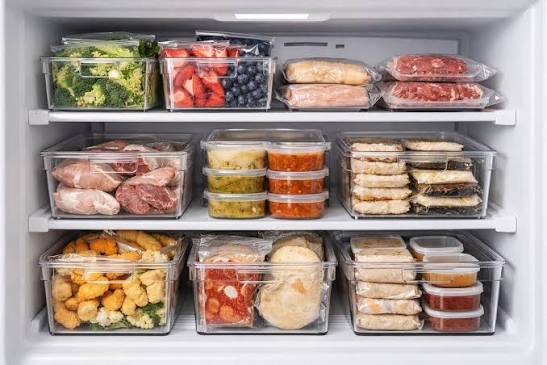
A packed freezer can hold plenty of food while hiding half of what you own. Packages disappear underneath newer purchases, leftovers become impossible to identify, and the same items get bought again. Better freezer organization isn’t mainly about making the drawers look attractive. It’s about making frozen food visible, reachable, and easy to rotate.
Empty One Section at a Time
You don’t need to unload the entire freezer unless you can work quickly and keep food appropriately cold. Start with one drawer, shelf, or basket so the project remains manageable.
Group similar items as you remove them. Meat, vegetables, fruit, prepared meals, bread, and small ingredients are practical starting categories.
People gathering food-storage reference material may find many elaborate organizing systems online, but the best system is usually the one your household can maintain on an ordinary busy day.
Remove Mystery Packages Before Reorganizing
Organization won’t solve a drawer filled with unidentified containers. Look for damaged packaging, duplicate items, and foods that nobody remembers freezing.
If something is unlabeled, identify it only when you can do so confidently. Never guess about food safety. If an item has thawed unexpectedly or its storage history is uncertain, consult appropriate food-safety guidance before deciding whether to use it.
A freezer becomes easier to manage once every remaining package has a clear purpose.
Create Simple Zones Instead of Perfect Stacks
Assigning categories to areas reduces searching. You might keep proteins in one drawer, vegetables in another, and leftovers in a labeled bin.
| Freezer Problem | Organization Fix | Benefit |
|---|---|---|
| Loose small bags | Place in one bin | Easier retrieval |
| Unlabeled leftovers | Add name and date | Less guessing |
| Duplicate purchases | Keep categories together | Better visibility |
| Bulky packaging | Repack when appropriate | Saves usable space |
Shared home-organization ideas may inspire different layouts, but avoid buying containers until you’ve measured the actual drawer dimensions.
Containers that look efficient on a shelf can waste space if they don’t fit your freezer.
Make Older Food Easier to See First
New purchases often get placed directly in front of older food. Over time, perfectly usable items migrate toward the back and disappear.
Place recently purchased items behind or beneath older matching items when practical. You don’t need a complicated inventory database; even a small written list of meals, meat, or bulk-cooked foods can prevent forgotten packages.
Broader kitchen-planning content may offer useful household systems, but visibility matters more than having a complicated tracking method.
Where Freezer Organization Commonly Fails
Overfilling containers is one problem. A category bin isn’t useful if you must remove five frozen packages to reach the sixth.
Another mistake is creating categories that are too specific. If every ingredient has its own location, family members may stop following the system. Broad zones are easier to remember.
Don’t confuse organization with indefinite storage, either. Labels and dates help you identify what has been sitting unnoticed and decide what should be used next.
Frequently Asked Questions
What is the easiest way to organize a freezer drawer?
Start with broad categories based on what you regularly buy. Group similar foods together, label unclear packages, and position frequently used items where they’re easy to reach.
Should I use freezer bins?
Bins can help contain small packages and prevent categories from mixing. Measure the drawer first and leave enough room to see and remove food without unpacking the entire freezer.
How can I remember what is already frozen?
Keep a simple list on the freezer, refrigerator, or phone. Tracking higher-value foods and prepared meals is often enough to prevent duplicate buying without recording every small item.
Make Visibility the Main Rule
A useful freezer doesn’t need matching containers or perfect rows. It needs a layout that shows what you have before you buy more. Keep categories broad, label food clearly, rotate older items forward, and review each drawer periodically. When finding dinner takes seconds instead of digging through frozen packages, waste becomes much easier to prevent.