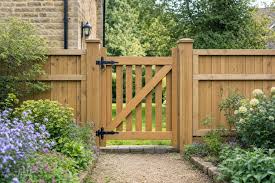
A fence gate that drags on the ground or refuses to meet its latch usually has a small alignment problem somewhere in the structure. Loose hinges, movement in the post, warped timber, or a gate that was built without enough bracing can all cause sagging.
Finding the actual source prevents repeated adjustments that only work temporarily.
Check Where the Gate Has Moved
Close the gate slowly and watch the gaps around all four sides. A widening gap near the upper hinge and a narrow gap near the lower latch often suggests the gate has dropped out of square.
Check the hinges, screws, latch, frame joints, and supporting post before changing anything.
| Symptom | Likely Area to Check | Possible Fix |
|---|---|---|
| Gate drags | Hinges/frame | Realign |
| Latch misses | Gate position | Adjust latch |
| Post moves | Post base | Stabilize post |
| Frame twists | Bracing | Repair structure |
Tighten Hardware Before Making Bigger Changes
Loose hinge fasteners are one of the simplest problems to correct. Tighten suitable screws or bolts and inspect whether the timber around them remains sound.
Fence repairs fit naturally among other practical home maintenance jobs, and careful diagnosis can prevent unnecessary replacement. If fasteners repeatedly loosen because the wood is damaged, simply tightening them again won’t solve the underlying weakness.
Use hardware suitable for outdoor exposure and the weight of the gate.
Confirm the Supporting Post Is Stable
A perfectly square gate cannot operate correctly if its hinge post leans or moves. Push gently against the post and inspect the base for movement, rot, cracked concrete, or disturbed soil.
A fence is also a strong visual part of the yard, so structural repairs can be coordinated with broader outdoor property improvements when practical. Function should still come first.
A severely unstable post may need repair or replacement before the gate itself can be aligned.
Restore the Gate’s Square Shape
Measure diagonally across the gate in both directions. Significant differences can indicate that the frame has racked out of square.
Bracing should resist the direction in which the gate wants to sag. The exact method depends on the gate material and construction.
For homeowners also updating surrounding fences, walls, or finishes, property styling references may help keep repairs visually consistent with the rest of the exterior.
Adjust the Latch Last
Don’t move the latch immediately simply because the gate no longer closes. Doing that can hide a hinge or frame problem while the gate continues to sag.
Realign the gate first. Then reposition the latch only if the corrected gate still doesn’t meet it properly.
Maintain Clearance Around the Gate
Ground levels can change. Gravel moves, soil builds up, roots grow, and paving may shift, leaving a formerly clear gate scraping against the surface.
Remove minor obstructions where appropriate, but don’t keep trimming the bottom of a gate every time it drags. Repeated cutting can leave excessive clearance once the real alignment problem is eventually fixed.
Check drainage too, particularly around timber posts.
Repairs That Often Fail Too Quickly
Adding stronger hinges won’t help much if the supporting post is loose. Moving the latch doesn’t correct a gate that has dropped several centimeters, and forcing a swollen wooden gate closed can damage hardware.
Another common mistake is making multiple adjustments at once. If you change the post, hinges, frame, and latch simultaneously, it becomes difficult to tell which problem actually caused the sag.
Work from the supporting structure outward.
Frequently Asked Questions
Why does my fence gate keep sagging?
Common causes include loose hinges, a leaning hinge post, weak frame joints, insufficient bracing, heavy gate construction, or timber movement caused by weather and moisture.
Can an anti-sag kit fix a wooden gate?
It can help some structurally sound gates that have racked out of square. It won’t correct a rotten frame, unstable fence post, or severely damaged hinge connection.
Should a gate be perfectly level?
A gate should be aligned so it swings freely, maintains sensible clearances, and meets the latch correctly. Exact positioning depends on the fence design and surrounding ground.
Correct the Structure Before the Latch
Start with the post, then inspect the hinges, frame, and bracing before adjusting the closing hardware. That sequence prevents temporary fixes from hiding larger problems.
Once the structure is stable and square, fine adjustments become much easier. A gate that operates correctly shouldn’t require force, lifting, or repeated latch repositioning every few weeks.