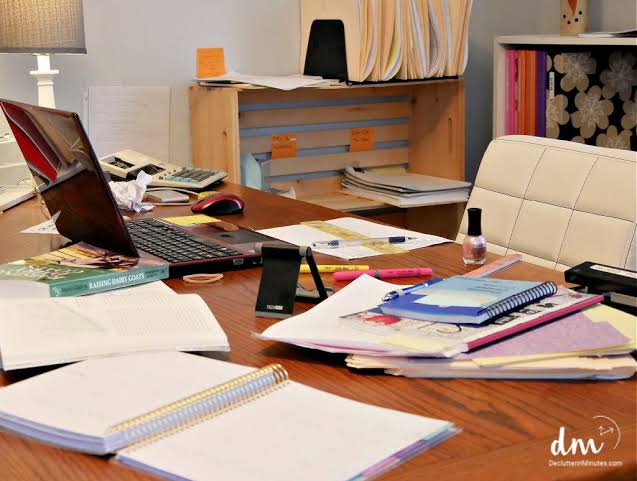
A cluttered desk does more than look messy. Important bills disappear under notebooks, unfinished tasks remain visible all day, and finding one document can require sorting through ten unrelated ones. Cluttered home desks become easier to control when papers have clear destinations instead of being shifted from one corner of the workspace to another.
Start by Separating Active Papers From Stored Papers
Not every document on a desk deserves permanent desk space. Papers you are actively using this week belong close at hand, while completed records should move elsewhere.
Create a small number of functional categories such as action needed, waiting, reference, and filing. Avoid beginning with twenty detailed labels. An organization system that takes too long to maintain usually collapses as soon as work becomes busy.
Remove Items That Aren’t Desk Work
Receipts from shopping bags, unopened household mail, children’s school papers, instruction manuals, and random cables can gradually turn a work surface into general storage.
Return those items to the part of the home where they are actually used.
Give Incoming Paper One Landing Place
Loose mail causes clutter because it arrives continuously. Choose one tray, folder, or container for incoming papers and process it on a predictable schedule.
People exploring practical organization ideas may encounter complicated filing systems, but the best system is usually one you can use without thinking. A single controlled inbox is often more useful than several decorative organizers with unclear purposes.
Open mail near a recycling bin or shredder so unwanted material can leave immediately rather than becoming another pile.
Organize by Action, Not Appearance
A perfectly aligned stack can still contain forgotten obligations. The better question is what each paper requires you to do.
Using structured information approaches as inspiration, divide paperwork according to function. Bills that require payment should not disappear into the same folder as warranties you may not need for years.
| Paper Type | Where It Belongs | Next Action |
|---|---|---|
| Current bill | Action folder | Pay or schedule |
| Receipt to keep | Record folder | File |
| Reference document | Long-term storage | Archive |
| Junk mail | Recycling/shredding | Remove |
If a paper has a deadline, transfer that deadline to the calendar or task system you actually use. The physical sheet shouldn’t be your only reminder.
Reduce the Amount of Paper Returning to the Desk
Once the surface is clear, prevent the same material from rebuilding. Switch suitable recurring statements to digital delivery if that fits your preferences, unsubscribe from unwanted mail, and scan records you don’t need physically when appropriate.
Fresh workspace improvement ideas can help with layout choices, but don’t solve a paper-flow problem with more storage products alone. Adding extra trays before defining their purpose can simply create more places for clutter to hide.
Keep everyday tools limited to items you actually reach for during normal work.
Where Desk Organization Often Fails
The biggest mistake is attempting one dramatic cleanup without creating rules for new paper. The desk looks impressive for several days, then gradually returns to its old condition.
Over-categorizing causes another failure. If every receipt requires a decision between several nearly identical folders, papers will wait in a pile instead.
Avoid using the desk as permanent archival storage. Tax records, property documents, manuals, sentimental papers, and completed project material usually need dedicated long-term locations elsewhere.
Frequently Asked Questions
How often should I clear paperwork from my desk?
A short review once or twice a week works for many households. High-volume home offices may need a brief daily reset to prevent incoming documents from accumulating.
Should I keep paperwork in drawers or visible trays?
Keep active work visible enough to remember but contained enough to avoid distraction. Archived material is usually better stored in labeled drawers, cabinets, or digital folders.
What should I do with papers I’m unsure about?
Create one temporary review folder rather than leaving uncertain items loose. Revisit it regularly so it doesn’t become permanent hidden clutter.
Make Every Paper Earn Its Desk Space
A cleaner desk comes from controlling where papers move, not from repeatedly rearranging piles. Establish one incoming location, separate active tasks from records, remove unnecessary paper quickly, and relocate long-term files once their immediate purpose is finished. When every document has a next step or destination, the desk can return to being a workspace instead of a storage zone.