Messy entryway shoes can make a small area feel cluttered faster than almost anything else. Shoes spread across the floor also interfere with cleaning and create an awkward first impression near the main door. A better setup doesn’t require a large mudroom. It requires clear limits, accessible storage, and a routine the household can actually maintain.
Decide Which Shoes Belong at the Door
The easiest way to control entryway clutter is to reduce how many pairs live there. Everyday footwear may need quick access, while seasonal, formal, and rarely worn shoes can usually be stored elsewhere.
Before buying organizers, count the pairs that regularly accumulate near the entrance. Home-organization reading can offer ideas, but the right capacity depends on your household’s actual habits.
A family of five needs a different system from one person who normally rotates between two pairs.
Choose Storage That Matches the Space
Open shelves make shoes easy to grab, while closed cabinets conceal visual clutter. Baskets work well for casual footwear but can become messy if they are too deep or shared without any system.
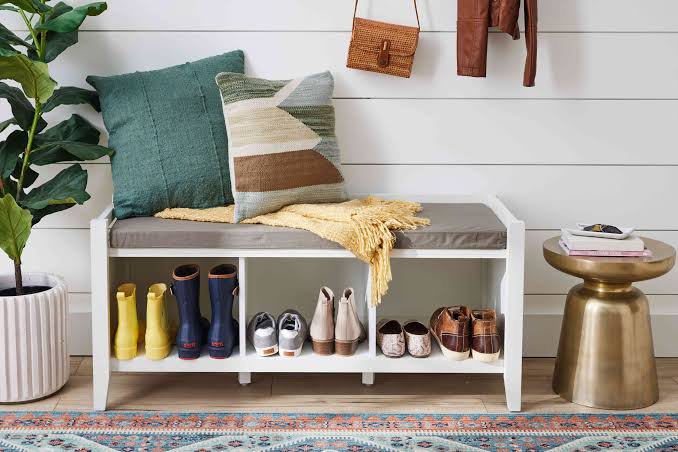
A slim shoe rack can suit a narrow hallway, while a bench with lower storage adds both seating and organization. People browsing practical household ideas should pay particular attention to floor depth so storage doesn’t create a new obstacle beside the door.
| Storage Type | Useful For | Possible Drawback |
|---|---|---|
| Open rack | Everyday footwear | Shoes remain visible |
| Closed cabinet | Cleaner appearance | Needs door clearance |
| Storage bench | Seating plus shoes | Uses more floor space |
| Individual baskets | Family organization | Can become overfilled |
Create a Limit for Each Person
Storage works better when everyone knows where their shoes belong. Give each household member a shelf, basket, cubby, or clearly understood section.
The physical limit matters. Once a person’s assigned space is full, another pair should normally move to bedroom or closet storage rather than expanding across the floor.
General lifestyle guides may suggest elaborate organizing systems, but simple boundaries are usually easier to maintain during rushed mornings.
Add a Small Overflow Rule
Guests, wet shoes, sports footwear, or boots can temporarily disrupt even a good system. Reserve one small overflow area rather than allowing the entire entryway to become temporary storage.
A washable tray can also contain moisture and dirt from outdoor footwear.
Make Cleaning Easy
Shoes carry dust, grit, moisture, and outdoor debris into the entrance. Storage that sits directly on the floor can make sweeping or vacuuming awkward, so consider whether the rack is easy to move or clean beneath.
Place a durable mat near the door and clean it regularly. If wet shoes are common, allow them to dry before putting them into poorly ventilated closed storage.
Why Shoe Organizers Sometimes Fail
Buying more storage can actually increase clutter if it simply creates permission to keep more shoes near the door. An oversized rack may slowly fill with pairs nobody uses regularly.
Another problem is choosing a system that requires too much effort. If people must open several doors, move other items, or carry shoes across the room, footwear often ends up back on the floor. Convenience matters more than a perfect showroom appearance.
Frequently Asked Questions
How many pairs of shoes should stay by the front door?
There is no fixed number. Keep enough for everyday convenience while limiting the collection to what comfortably fits your designated entryway storage.
What is best for a narrow entryway?
Slim vertical racks, narrow closed cabinets, wall-adjacent shelves, and compact baskets can reduce floor use. Measure walking clearance before purchasing furniture.
How do I organize children’s shoes near the door?
Use low, easy-to-reach shelves or labeled cubbies. A simple system children can use independently is usually more sustainable than complicated storage requiring adult help.
Give Every Pair a Defined Home
An organized entryway starts with fewer shoes on the floor, not more furniture. Decide what belongs near the door, give each person a defined amount of space, and move rarely used footwear elsewhere. Choose storage that is easy to reach and easy to clean around. A small, practical system will usually outperform a larger one nobody follows.