
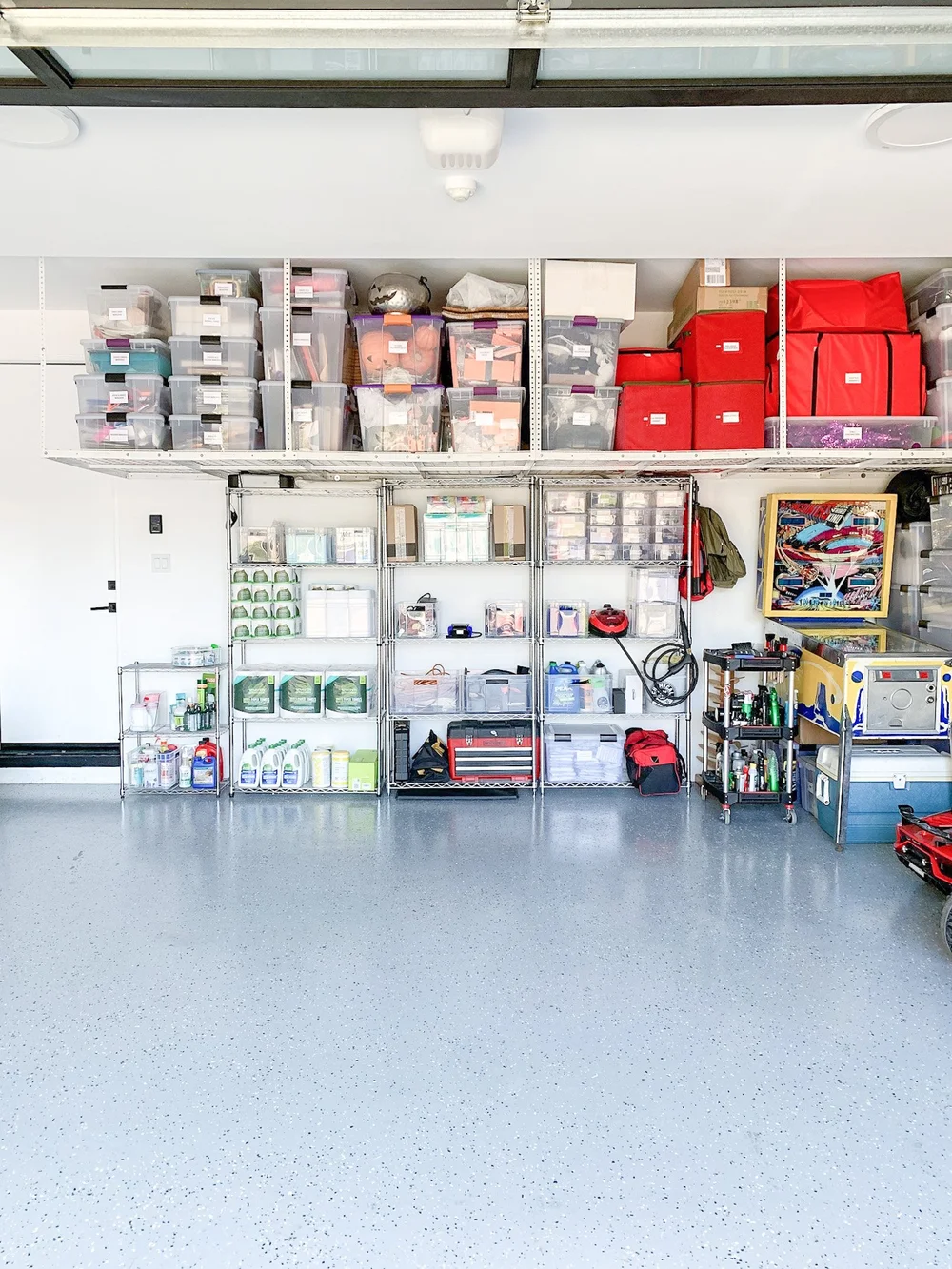
Garage shelves become messy when every open space turns into temporary storage. A screwdriver lands beside garden fertilizer, sports equipment gets pushed behind paint cans, and soon finding one item requires moving five others.
Creating clearly labeled zones changes the system. Each shelf gains a purpose, making both cleanup and future storage much faster.
Start by Sorting Before You Label
Labels are useful only after you decide what belongs together. Empty one manageable shelf or section at a time and group similar items on the floor or a workbench.
Common categories might include automotive supplies, gardening, hand tools, cleaning products, sports gear, seasonal decorations, and household repair materials.
Remove obvious clutter first
Broken objects, empty packaging, duplicates you no longer need, and items that belong elsewhere should leave the storage area before containers are assigned.
Give Every Shelf a Defined Job
Instead of labeling individual objects, create broad zones that match the way your household uses the garage. Frequently used items should remain easy to reach, while seasonal supplies can occupy higher or less convenient shelves.
Useful home organization reading may offer attractive storage concepts, but practical access matters more than creating a showroom. A zone works when family members can identify it quickly and return items without guessing.
| Zone | Good Location | Typical Contents |
|---|---|---|
| Daily-use tools | Eye level | Tape, drivers, pliers |
| Seasonal items | Higher shelves | Decorations, camping gear |
| Garden supplies | Near garage door | Gloves, pots, tools |
| Bulk supplies | Lower shelves | Paper goods, sealed stock |
Make Labels Large Enough to Matter
Tiny handwritten labels disappear visually once shelves become busy. Use clear wording that can be read from a normal standing position.
Many household improvement guides focus on containers and shelving products, but labeling can improve an existing setup without replacing everything. Consistency helps: choose one naming style and avoid overlapping categories such as “tools,” “garage tools,” and “miscellaneous tools.”
Transparent bins can make identification easier, while opaque containers benefit from more detailed labels.
Protect Safety While Organizing
Heavy objects should generally stay lower so they are easier to handle and less dangerous if shifted. Follow the shelf manufacturer’s load limits, and do not stack unstable containers above head height.
Storage ideas found through storage ideas and opinions can provide inspiration, yet chemicals, fuels, sharp tools, and other hazardous materials need suitable storage based on their labels and local safety requirements.
Never let organization hide a product’s warning label.
Why “Miscellaneous” Becomes a Problem
A miscellaneous bin feels efficient because anything can go inside it. Over time, that flexibility usually recreates the exact problem the system was meant to solve.
If several unrelated objects continually end up without a home, create one or two new specific zones instead. Keep a small temporary sorting tray if needed, but empty it regularly. Permanent overflow piles are usually a sign that the categories need adjusting.
Frequently Asked Questions
How many garage storage zones should I create?
Use enough categories to make items easy to return without creating dozens of tiny sections. Many garages work better with broad activity-based zones, such as tools, gardening, automotive, sports, seasonal storage, and household supplies.
Are bins necessary for organized garage shelves?
No. Open shelves can work well for sturdy, frequently used items. Bins are more useful for small objects, loose accessories, items needing dust protection, or categories that otherwise spread across the shelf.
How often should garage shelves be reorganized?
There is no fixed schedule. Revisit the system when labels no longer match what is stored, containers regularly overflow, or finding common items starts taking too long. A short seasonal reset may prevent a major cleanup later.
Make Returning Items Effortless
A garage stays organized when putting something away is nearly as easy as leaving it on the nearest shelf. Clear zones and readable labels remove the small decisions that create clutter.
Start with one shelving unit, assign each section a purpose, and adjust categories after using the system for a few weeks. The best arrangement is the one your household can maintain without thinking about it.


